Blog

Foot Pain and Rheumatoid Arthritis

Managing foot pain associated with rheumatoid arthritis, or RA, is vital for maintaining mobility and quality of life. Podiatric interventions for RA typically focus on a multi-faceted approach that combines medication, exercise, custom orthotics, and sometimes surgical treatments. Medications for rheumatoid arthritis can include anti-inflammatory or disease-modifying antirheumatic drugs to reduce pain. Corticosteroid injections are given for localized foot pain or an affected joint, and can offer temporary relief from inflammation. Custom orthotics are tailor-made shoe inserts that can provide better arch support and cushioning to relieve stress on inflamed joints. In severe cases where deformities have developed, surgical interventions such as joint fusion or joint replacement may be considered. If you suffer from rheumatoid arthritis and it is causing pain in your feet or ankles, it is strongly suggested that you make an appointment with a podiatrist for relief and pain management techniques.

Because RA affects more than just your joints, including the joints in your feet and ankles, it is important to seek early diagnosis from your podiatrist if you feel like the pain in your feet might be caused by RA. For more information, contact one of our podiatrists of Riznyk Podiatry. Our doctors will assist you with all of your podiatric concerns.

What Is Rheumatoid Arthritis?

Rheumatoid Arthritis (RA) is an autoimmune disorder in which the body’s own immune system attacks the membranes surrounding the joints. Inflammation of the lining and eventually the destruction of the joint’s cartilage and bone occur, causing severe pain and immobility.

Rheumatoid Arthritis of the Feet

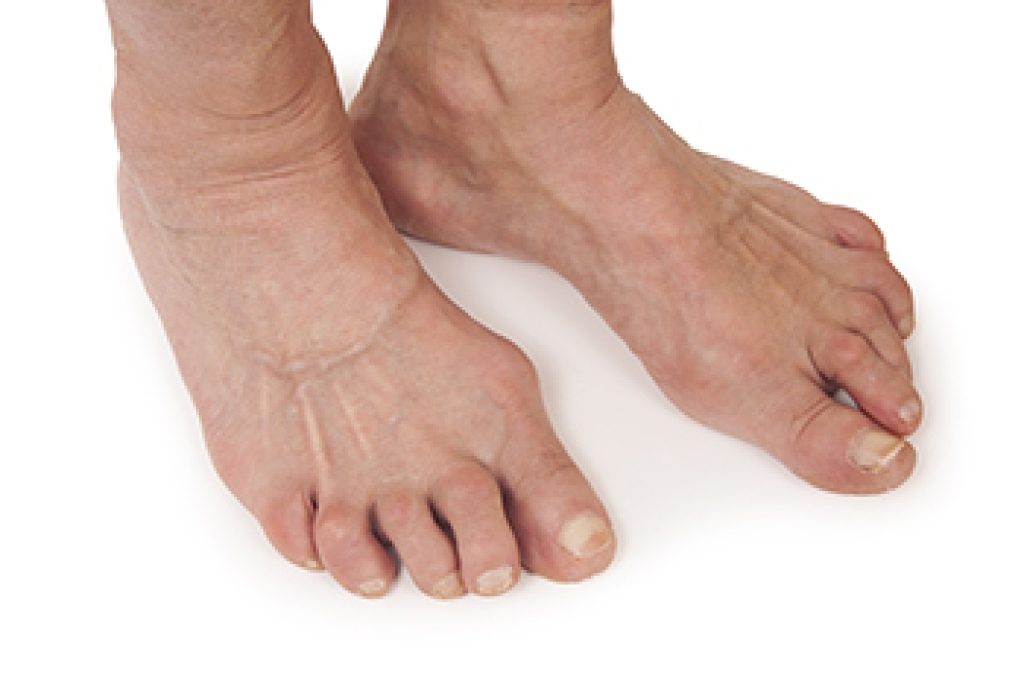
Although RA usually attacks multiple bones and joints throughout the entire body, almost 90 percent of cases result in pain in the foot or ankle area.

Symptoms

  • Swelling and pain in the feet
  • Stiffness in the feet
  • Pain on the ball or sole of feet
  • Joint shift and deformation

Diagnosis

Quick diagnosis of RA in the feet is important so that the podiatrist can treat the area effectively. Your doctor will ask you about your medical history, occupation, and lifestyle to determine the origin of the condition. Rheumatoid Factor tests help to determine if someone is affected by the disease.

If you have any questions, please feel free to contact our office located in Orchard Park, NY . We offer the newest diagnostic and treatment technologies for all your foot care needs.

Read more about Rheumatoid Arthritis in the Feet

Stretches and Exercises for Optimal Foot Health

Our feet bear the weight of our entire beings, making them the foundation of our bodies. Incorporating stretching and exercising into your routine can provide many benefits, including proper foot health. Begin with toe stretches by curling and uncurling your toes, holding for a few seconds, and repeating. Ankle circles are excellent for improving flexibility and range of motion. Point your toes and then flex them, holding each position briefly. Rolling a tennis ball under your foot can help relieve tension and improve circulation. Stretching the calf muscles can also be beneficial for the feet, and this is done by placing your hands on a wall and stepping one foot back while keeping it flat on the floor. Lastly, balance exercises such as calf raises strengthen the muscles in your feet and ankles. Regularly practicing these stretches and exercises can contribute to foot strength, flexibility, and overall health. If you would like more information about specific foot stretches and exercises to promote proper foot health, it is suggested that you consult with a podiatrist.

Why Stretching Is Important for Your Feet

Stretching the feet is a great way to prevent injuries. If you have any concerns with your feet consult with one of our podiatrists from Riznyk Podiatry. Our doctors will assess your condition and provide you with quality foot and ankle treatment.

Stretching the Feet

Stretching the muscles in the foot is an important part in any physical activity. Feet that are tight can lead to less flexibility and make you more prone to injury. One of the most common forms of foot pain, plantar fasciitis, can be stretched out to help ease the pain. Stretching can not only ease pain from plantar fasciitis but also prevent it as well. However, it is important to see a podiatrist first to determine if stretching is right for you. Podiatrists can also recommend other ways to stretch your feet. Once you know whether stretching is right for you, here are some excellent stretches you can do.

  • Using a foam roller or any cylindrical object (a water bottle or soda can will do), roll the object under your foot back and forth. You should also exert pressure on the object. Be sure to do this to both feet for a minute. Do this exercise three times each.
  • Similar to the previous exercise, take a ball, such as a tennis ball, and roll it under your foot while seated and exert pressure on it.
  • Grab a resistance band or towel and take a seat. If you are using a towel, fold it length wise. Next put either one between the ball of your foot and heel and pull with both hands on each side towards you. Hold this for 15 seconds and then switch feet. Do this three times for each foot.
  • Finally hold your big toe while crossing one leg over the other. Pull the toe towards you and hold for 15 seconds. Once again do this three times per foot.

It is best to go easy when first stretching your foot and work your way up. If your foot starts hurting, stop exercising to ice and rest the foot. It is advised that you then see a podiatrist for help.

If you have any questions please contact our office located in Orchard Park, NY . We offer the newest diagnostic and treatment technologies for all your foot and ankle needs.

Read more about Stretching Your Feet

Varicose Veins in the Feet and Ankles

Varicose veins that appear in the feet and ankles are known as corona phlebectasia in the medical field. Corona describes the fan-like pattern of these abnormal capillaries, resembling rays radiating from the sun. Phlebectasia signifies the presence of abnormal veins and capillaries. These veins often result from venous reflux or insufficiency, where blood flows backward due to valve failure in the veins. Patients with prominent ankle veins or corona phlebectasia typically have underlying venous insufficiency in the lower leg. Patients may present with visible veins alone, visible veins with symptoms, or symptoms alone. Ankle and foot varicosities should be examined for underlying issues. Timely treatment is important because untreated varicose veins can lead to symptoms such as leg aches, itching, swelling, and skin conditions, including ulceration and blood clots. If you have varicose veins in your feet or ankles, it is suggested that you make an appointment with a podiatrist for an examination and any treatment that is deemed necessary.

Poor circulation is a serious condition and needs immediate medical attention. If you have any concerns with poor circulation in your feet contact one of our podiatrists of Riznyk Podiatry. Our doctors will treat your foot and ankle needs.

Poor Circulation in the Feet

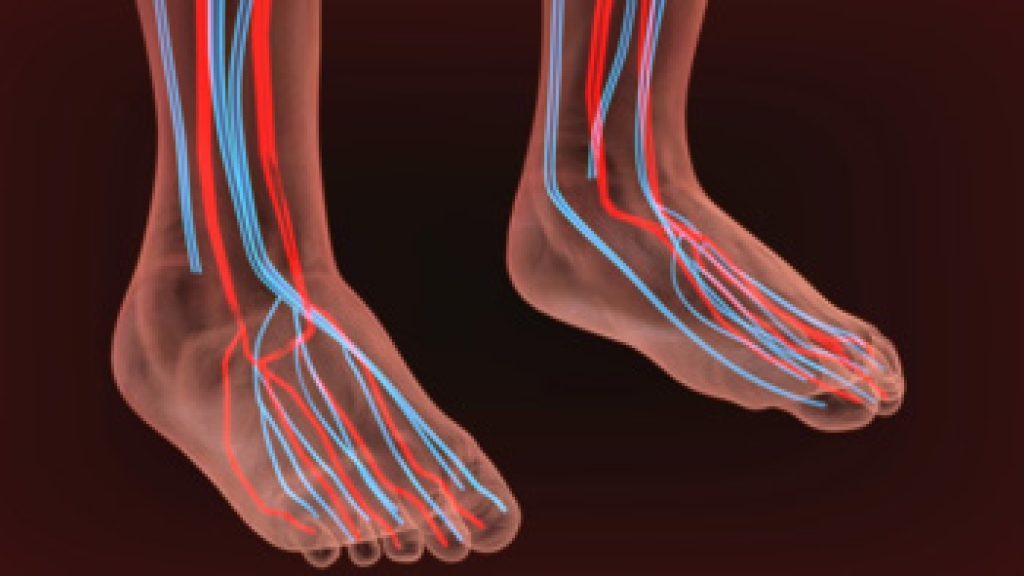
Poor blood circulation in the feet and legs is can be caused by peripheral artery disease (PAD), which is the result of a buildup of plaque in the arteries.

Plaque buildup or atherosclerosis results from excess calcium and cholesterol in the bloodstream. This can restrict the amount of blood which can flow through the arteries. Poor blood circulation in the feet and legs are sometimes caused by inflammation in the blood vessels, known as vasculitis.

Causes

Lack of oxygen and oxygen from poor blood circulation restricts muscle growth and development. It can also cause:

  • Muscle pain, stiffness, or weakness 
  • Numbness or cramping in the legs
  • Skin discoloration
  • Slower nail & hair growth
  • Erectile dysfunction

Those who have diabetes or smoke are at greatest risk for poor circulation, as are those who are over 50. If you have poor circulation in the feet and legs it may be caused by PAD and is important to make changes to your lifestyle in order to reduce risk of getting a heart attack or stroke. Exercise and maintaining a healthy lifestyle will dramatically improve conditions.

As always, see a podiatrist as he or she will assist in finding a regimen that suits you. A podiatrist can also prescribe you any needed medication. 

If you have any questions, please feel free to contact our office located in Orchard Park, NY . We offer the newest diagnostic and treatment technologies for all your foot care needs.
Read more about Causes, Symptoms, and Treatment of Poor Blood Circulation in the Feet

Causes of Morning Heel Pain

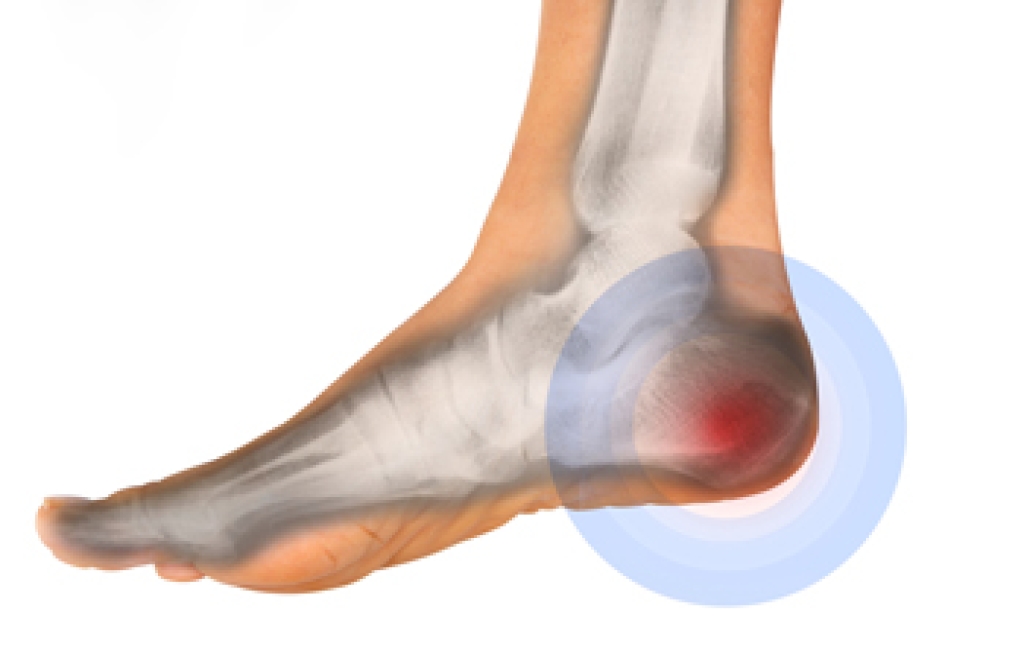
Morning heel pain can have several underlying causes. One of the most common culprits is plantar fasciitis, a condition in which the broad band of tissue that runs along the bottom of the foot becomes inflamed. This results in sharp or stabbing pain in the heel that tends to be most intense in the morning. Another source is Achilles tendonitis, which is the inflammation of the tendon that connects the calf muscles to the heel bone. It can be caused by tight calf muscles or overuse. Morning heel pain has also been linked to rheumatoid arthritis, an autoimmune condition that causes Inflammation in the foot joints and results in stiffness and discomfort, especially after periods of rest. A stress fracture in the heel bone may also be responsible for morning discomfort. These hairline fractures can cause localized pain that becomes more noticeable when you first put weight on your feet in the morning. Lastly, aging can contribute to morning heel pain, as the muscles, tendons, and ligaments lose some of their flexibility and resilience. If you're experiencing morning heel pain, it's suggested that you make an appointment with a podiatrist who can accurately diagnose the cause and recommend an appropriate treatment plan.

Many people suffer from bouts of heel pain. For more information, contact one of our podiatrists of Riznyk Podiatry. Our doctors can provide the care you need to keep you pain-free and on your feet.

Causes of Heel Pain

Heel pain is often associated with plantar fasciitis. The plantar fascia is a band of tissues that extends along the bottom of the foot. A rip or tear in this ligament can cause inflammation of the tissue.

Achilles tendonitis is another cause of heel pain. Inflammation of the Achilles tendon will cause pain from fractures and muscle tearing. Lack of flexibility is also another symptom.

Heel spurs are another cause of pain. When the tissues of the plantar fascia undergo a great deal of stress, it can lead to ligament separation from the heel bone, causing heel spurs.

Why Might Heel Pain Occur?

  • Wearing ill-fitting shoes                
  • Wearing non-supportive shoes
  • Weight change           
  • Excessive running

Treatments

Heel pain should be treated as soon as possible for immediate results. Keeping your feet in a stress-free environment will help. If you suffer from Achilles tendonitis or plantar fasciitis, applying ice will reduce the swelling. Stretching before an exercise like running will help the muscles. Using all these tips will help make heel pain a condition of the past.

If you have any questions, please feel free to contact our office located in Orchard Park, NY . We offer the newest diagnostic and treatment technologies for all your foot care needs.

Read more about Heel Pain

Plantar Warts Can Be Treated!

Plantar warts are small growths that develop on parts of the feet that bear weight. They're typically found on the bottom of the foot. Don't live with plantar warts, and call us today!

Connect With Us