Blog

Flip-Flops and Wet Feet

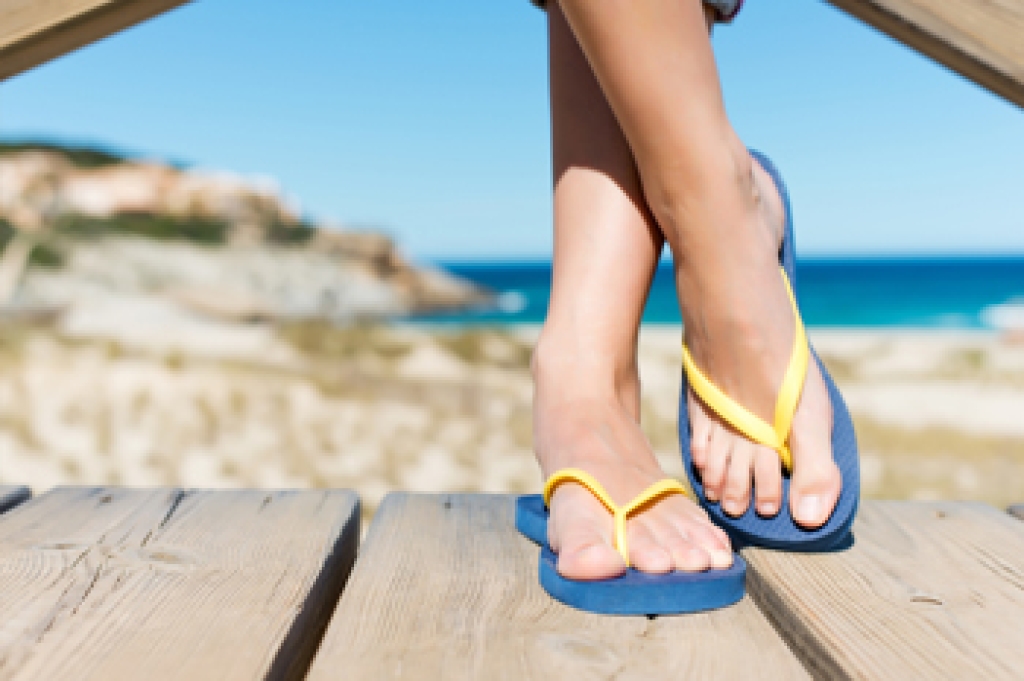
Flip-flops are common beach and pool footwear, and if you’ve ever worn flip-flops to these places, you’ve likely worn them while your feet are wet. Although flip-flops leave most of your foot exposed, allowing it to air dry, walking around with wet feet in wet flip-flops can be quite dangerous. Wet flip-flops are more likely to slip off your foot, often coming off entirely while you walk. This can lead to a whole host of injuries, from getting a splinter in your foot from the boardwalk to twisting and spraining your ankle. Keeping the flip-flops on the feet while walking is difficult even under dry conditions, but when the shoes or feet are wet, it becomes a Herculean task. To keep flip-flops on the foot, you must scrunch up your toes in an awkward position. Over time, this can cause joint stiffness and hammertoes to develop. If you intend to wear flip-flops to the beach or pool, be sure to thoroughly dry your feet and the shoes prior to slipping them on. For more information about the relationship between footwear and the health of your feet, consult with a podiatrist. 

Flip-flops are not always the best choice of footwear. If you have any concerns about your feet or ankles, contact one of our podiatrists from Riznyk Podiatry. Our doctors will assist you with all of your foot and ankle needs.

Flip-Flops and Feet

When the weather starts warming up, people enjoy wearing flip-flops.  Flip-flops are comfortable, stylish, and easy to slip on and off; they're perfect for any summer beach goer.  However, these shoes can cause harm to the feet.

How Can Flip-Flops Affect Me Long-Term?

  • Ankle problems
  • Hip problems
  • Lower back problems
  • Pain in the balls of the feet
  • Problems with foot arches
  • Changes in the way you walk

Are There Injuries Associated with Flip-Flops?

Yes.  Since flip-flops are relatively weak and do not provide the same amount of support as sneakers, people who wear flip-flops regularly are more susceptible to injuries. On top of that, the open nature of the shoe makes your feet more prone to other problems, such as cuts and even infections.  Common injuries and ailments include:

  • Sprained ankles
  • Blisters
  • Infections
  • Cuts and Scrapes

I like Wearing Flip-Flops. Are There Safe Alternatives?

When buying flip-flops, try to find ones that have sturdy soles and that are made of high-quality materials that will support for your feet.  These flip-flops will cost more but will also last longer as a result.

If you have any questions, please feel free to contact our office located in Orchard Park, NY . We offer the newest diagnostic and treatment technologies for all your foot care needs.

Read more about Flipping Out About Flip Flops

Why Live with Pain and Numbness in Your Feet?

Suffering from this type of pain? You may have the foot condition known as Morton's neuroma. Morton's neuroma may develop as a result of ill-fitting footwear and existing foot deformities. We can help.

Heel Pain Can Indicate Fat Pad Contusion

Heel pain can be a result of a medical condition that is known as fat pad contusion, or Policeman's Heel. Simply put, it is a bruised heel, and it can cause pain and discomfort. This ailment can gradually develop, and affects the fatty tissues that are located under the heel. These types of tissues protect the heel bone, and are likened to a shock absorber. Fat pad contusion can develop from frequently participating in repetitive activities such as running, jumping, and walking. Additionally, it can be caused by wearing shoes that have inadequate cushioning, or from increasing running mileage too soon. Mild relief can be felt when the affected foot is rested until the pain diminishes. Athletes may find it beneficial to pursue non-weight bearing activities, like cycling or swimming, until the healing process is complete. If you have heel pain, it is strongly suggested that you are under the care of a podiatrist who can help you with proper treatment.

Many people suffer from bouts of heel pain. For more information, contact one of our podiatrists of Riznyk Podiatry. Our doctors can provide the care you need to keep you pain-free and on your feet.

Causes of Heel Pain

Heel pain is often associated with plantar fasciitis. The plantar fascia is a band of tissues that extends along the bottom of the foot. A rip or tear in this ligament can cause inflammation of the tissue.

Achilles tendonitis is another cause of heel pain. Inflammation of the Achilles tendon will cause pain from fractures and muscle tearing. Lack of flexibility is also another symptom.

Heel spurs are another cause of pain. When the tissues of the plantar fascia undergo a great deal of stress, it can lead to ligament separation from the heel bone, causing heel spurs.

Why Might Heel Pain Occur?

  • Wearing ill-fitting shoes                
  • Wearing non-supportive shoes
  • Weight change           
  • Excessive running

Treatments

Heel pain should be treated as soon as possible for immediate results. Keeping your feet in a stress-free environment will help. If you suffer from Achilles tendonitis or plantar fasciitis, applying ice will reduce the swelling. Stretching before an exercise like running will help the muscles. Using all these tips will help make heel pain a condition of the past.

If you have any questions, please feel free to contact our office located in Orchard Park, NY . We offer the newest diagnostic and treatment technologies for all your foot care needs.

Read more about Heel Pain

Tips for Workers who Stand for Most Of the Day

Research has indicated that approximately one quarter of Americans spend the majority of their workday sitting down. The rest of the working population can spend their day working on their feet, and it can be challenging for the body and mind. It is important to stretch the feet as often as possible, and this can be done by pointing and flexing the feet. Additionally, it is beneficial to wear shoes that fit correctly, ensuring the toes have adequate room to move freely in. Some patients find it helpful to wear compression stockings in order to reduce inciting swelling and soreness. Having regular foot massages will not only feel good, but can aid in maintaining proper circulation. If you would like more information about how to take care of and pamper your feet while working, please consult with a podiatrist, who can offer you simple methods to accomplish this.

While working on the feet, it is important to take the proper care of them. For more information about working on your feet, contact one of our podiatrists from Riznyk Podiatry. Our doctors will treat your foot and ankle needs.

Working on Your Feet

Standing on your feet for long periods of time can cause stress and pain in your feet. Your whole body may experience change in terms of posture, back pain, bunions, callouses and or plantar warts. There are ways to avoid these conditions with proper foot care, smart choices and correct posture.

Positive Changes

Negative heeled shoe – Choosing this shoe type places the heel slightly lower than the ball of the foot. These are great for overall foot health. Find shoes that fit you correctly.

Go barefoot – Our feet were not designed to be enclosed for all hours of the day. Try to periodically expose your feet to air.

Eliminate Pain

Foot Exercises – Performing simple exercises, incorporating yoga and doing stretches are beneficial. This will allow increased blood flow to the area and muscles of the foot.

Achilles tendon – Stretching the foot out flat on the floor will relax the calf muscles and tendon. These exercises can be performed almost anywhere. Make sure you add these exercises to your daily regimen. 

With a little bit of this information and knowing more about foot health, you will notice changes. Foot stretches and proper footwear will help with pain and prevent further issues.

If you have any questions please contact our office located in Orchard Park, NY . We offer the newest diagnostic and treatment technologies for all your foot and ankle needs.

Read more about How to Handle a Long Work Day on Your Feet

How Plantar Warts Appear

Plantar warts are common warts that form on the bottom of the foot as a result of the human papilloma virus, also known as HPV. HPV tends to thrive in warm and moist environments like locker rooms, shower floors and swimming pools. The virus transmits through direct contact and is usually picked up through a small opening in the skin. Once the wart forms, it will appear as a circular flat spot with a depressed center, and it may appear yellow or have a black dot in the middle. Plantar warts can also be very painful. Plantar warts that are causing pain or are spreading should be treated by a podiatrist since there is not a way to tell how deep the wart has grown. Based on the condition of the wart, a podiatrist will be able to determine the best course of treatment for the wart.

Plantar warts can be very uncomfortable. If you need your feet checked, contact one of our podiatrists from Riznyk Podiatry. Our doctors will assist you with all of your foot and ankle needs.

About Plantar Warts

Plantar warts are the result of HPV, or human papillomavirus, getting into open wounds on the feet. They are mostly found on the heels or balls of the feet.

While plantar warts are generally harmless, those experiencing excessive pain or those suffering from diabetes or a compromised immune system require immediate medical care. Plantar warts are easily diagnosed, usually through scraping off a bit of rough skin or by getting a biopsy.

Symptoms

  • Lesions on the bottom of your feet, usually rough and grainy
  • Hard or thick callused spots
  • Wart seeds, which are small clotted blood vessels that look like little black spots
  • Pain, discomfort, or tenderness of your feet when walking or standing

Treatment

  • Freezing
  • Electric tool removal
  • Laser Treatment
  • Topical Creams (prescription only)
  • Over-the-counter medications

To help prevent developing plantar warts, avoid walking barefoot over abrasive surfaces that can cause cuts or wounds for HPV to get into. Avoiding direct contact with other warts, as well as not picking or rubbing existing warts, can help prevent the further spread of plantar warts. However, if you think you have developed plantar warts, speak to your podiatrist. He or she can diagnose the warts on your feet and recommend the appropriate treatment options.

If you have any questions, please feel free to contact our office located in Orchard Park, NY . We offer the newest diagnostic and treatment technologies for all your foot care needs.

Read more about All About Plantar Warts
Connect With Us